Ten Minutes Is a Lie I Tell Myself (And It Works Every Time)
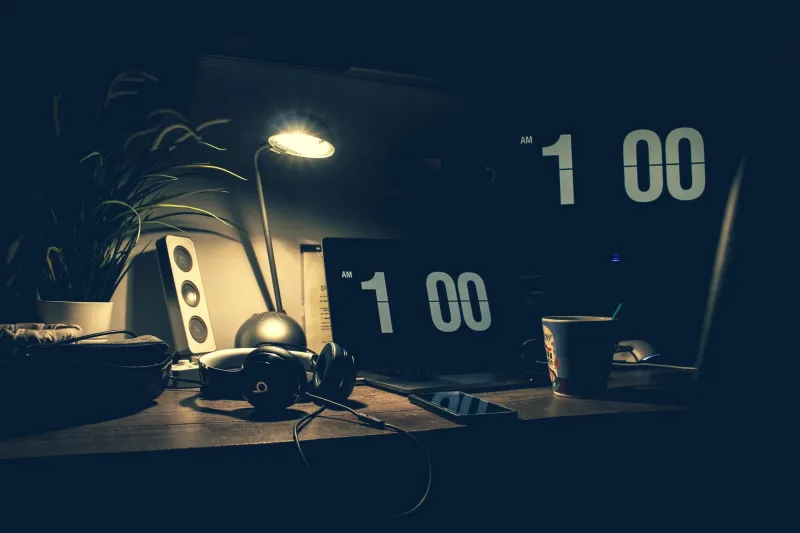
Somewhere in a folder on my laptop there's a podcast app concept with a beautiful landing page, a half-migrated database, and zero episodes. It died the way most of my projects die: not from failure, but from the weight of the next session. Every time I opened the folder, I wasn't looking at code — I was looking at an obligation the size of a weekend.
The fix, it turns out, wasn't better time management or a productivity system with a clever acronym. It was a lie. A small, deliberate lie I tell myself at the start of every work session: you only have to do ten minutes. Then you're free to stop.
Why the Brain Buys It
Starting is the expensive part. Not the work itself — the starting. There's a well-worn idea in psychology that the dread of a task lives mostly in the anticipation, not the execution. You've felt this with the gym, with taxes, with that email you've drafted mentally seventeen times. The task is rarely as bad as the version of it living in your head at 11pm.
The ten-minute rule works because it shrinks the decision. I'm not deciding to "build the podcast app." That's a project with a hundred unknowns, and my brain treats unknowns like threats. I'm deciding to open one file and fix one button. That's not a threat. That's barely a to-do.
There's a second mechanism at play, and it's the sneakier one: momentum. Once I'm ten minutes in, stopping requires its own decision — and by then, the friction has flipped. Quitting mid-sentence feels worse than continuing. So most sessions don't end at ten minutes. But here's the part I had to learn the hard way: sometimes they do, and you have to let them. If I turn the ten-minute rule into a bait-and-switch — "gotcha, now you're locked in for two hours" — my brain catches on and stops falling for it. The lie only works if I honor the exit.
The Rules I Actually Follow
- Ten minutes, timed, for real. Phone timer, not vibes.
- The session has one job. Not "work on the app." "Fix the audio upload bug." One sentence, decided the night before.
- Stopping is allowed and does not count as failure. This is the rule everyone breaks, and it's why the trick stops working for them.
- No makeup sessions. Miss a day? The debt is forgiven. Debt kills projects faster than laziness ever does.
One Week, Logged
I ran this on the podcast app — the one from the graveyard — to see if it could be resurrected. Here's the honest log:
Monday. Ten minutes. I fixed the upload button, which had been broken since roughly the Biden administration. Wanted to stop. Stopped. Felt weirdly fine about it.
Tuesday. Sat down planning to quit at ten. Hit forty-five minutes. The bug I'd been avoiding turned out to be a one-line fix, which was either a victory or an insult.
Wednesday. Rough day at work. Did my ten minutes anyway, mostly out of stubbornness. Stopped at ten. The streak held, and honestly, that mattered more than the output.
Thursday. Fifteen minutes. Refactored something ugly. Left a // TODO: clean this up for real comment and felt zero guilt, which is new for me.
Friday. Skipped it. Went to a friend's birthday thing in Brooklyn. Per rule four: no debt. Saturday me did not inherit a grudge.
Saturday. Ninety minutes. The longest session of the week, and it happened because of the short ones, not instead of them. The project had been warm all week. Warm things are easy to return to.
Sunday. Twenty minutes. Recorded a test episode. It's bad. It exists. Those are different things.
Total: about three and a half hours of actual work. The app went from "dead" to "embarrassingly functional." More importantly, it went from a source of guilt to a source of, I don't know, mild curiosity? That's the real compounding — not the hours, but the relationship.
The Part Nobody Puts on the Poster
The ten-minute rule will not save a project you don't actually care about. I've tested this too, on a notion I had for a meal-planning tool that I started out of envy of someone else's launch. Ten minutes was enough time to confirm I didn't want to build it — and that's a feature, not a bug. Small sessions are cheap reconnaissance. You find out fast whether the thing deserves your evenings.
For everything else, ten minutes is just a down payment on identity. Every session is a tiny vote for "I'm someone who finishes things," and votes, unlike motivation, show up daily. The podcast app didn't get finished because I found discipline. It got finished because I stopped asking myself for discipline and started asking for ten minutes.
The timer's on my desk right now. It's not a productivity tool. It's a permission slip.