A Tour of My Digital Graveyard: 5 Projects I Killed and What They Left Behind
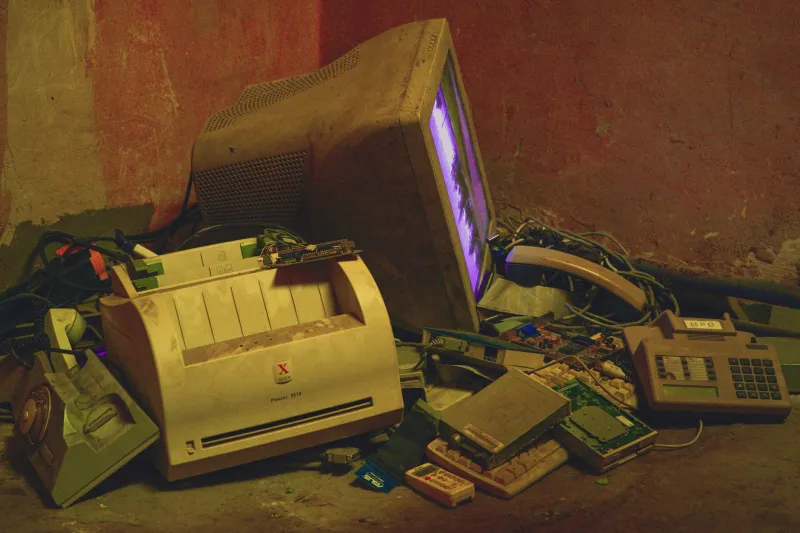
Scroll through anyone's portfolio and you'll see the same highlight reel: shipped products, glowing case studies, metrics that trend up and to the right. It's all true and it's all incomplete.
The most honest part of any creative career is the graveyard — the projects that died quietly in a folder somewhere. So today I'm opening mine. Here are five things I abandoned, what killed them, and what each one left behind.
1. The Habit Tracker Nobody Needed
Lifespan: Six weeks.
My first real attempt at a side project: a habit-tracking app with streaks, charts, and a very satisfying confetti animation. Technically, it mostly worked. Practically, I was building it for a problem I didn't have — I already tracked habits in a notebook and liked it that way.
Post-mortem: I was building a product to become a builder, not to solve anything. Confetti is not a value proposition.
What it taught me: Before writing a line of code, I now ask one question: who exactly is this annoying, and am I one of them?
2. The Newsletter With 11 Subscribers
Lifespan: Four issues.
Everyone in 2023 said "start a newsletter," so I started a newsletter. I picked a niche so narrow it barely existed, wrote four issues, watched the open rates, and quietly stopped when issue five refused to write itself.
Post-mortem: I chose the topic based on what I thought would perform, not what I could sustain. Eleven subscribers included my mom, who I'm fairly sure never opened a single one.
What it taught me: Consistency comes from genuine interest, not discipline. Write about the thing you'd ramble about at a bar, not the thing the growth gurus told you to pick.
3. The Podcast That Never Aired
Lifespan: Two recorded episodes, zero published.
I interviewed two friends, spent a weekend on editing, hated how my voice sounded, and shelved it. The files are still on a hard drive in a drawer, like a time capsule of self-consciousness.
Post-mortem: This one wasn't killed by the market — it was killed by me. Perfectionism dressed up as "waiting for the right equipment."
What it taught me: Shipping beats polishing. I later applied this to writing: publish at 80% and iterate. Nobody has ever noticed the missing 20%.
4. The Marketplace for a Problem That Didn't Exist
Lifespan: Three months, two users (one was me).
A peer-to-peer marketplace idea that made total sense in my head. I built the whole thing — listings, payments, profiles. Then came the brutal realization: nobody was searching for this. I had built a store in a town with no roads leading to it.
Post-mortem: I fell in love with the solution and never validated the problem. Classic. Painfully classic.
What it taught me: Now I do the opposite — I find the audience first and let them tell me what to build. It feels backwards. It works.
5. The Redesign Loop of Doom
Lifespan: Ongoing, technically. A ghost.
This one's meta: my own website. I've rebuilt this site at least four times. Every version was going to be "the one." Each time, I spent more energy on the design system than on publishing anything for it.
Post-mortem: Redesigning became a socially acceptable form of procrastination. It feels like work. It produces nothing.
What it taught me: Content outlives design. The current version of this site is deliberately boring, and it's the most productive it's ever been.
Why I Keep the Graveyard Public
Here's the thing: every one of these failures is now a data point that makes my successes more believable. When I say I've learned to validate before building, this list is the receipt.
A highlight reel says "I'm talented." A failure archive says "I'm real." And in a digital culture drowning in curated perfection, real is the rarer and more valuable currency.
So here's my challenge: dig up one dead project and write its post-mortem. You don't need a grand audience. You just need the honesty. The trust follows.